
Meet the team
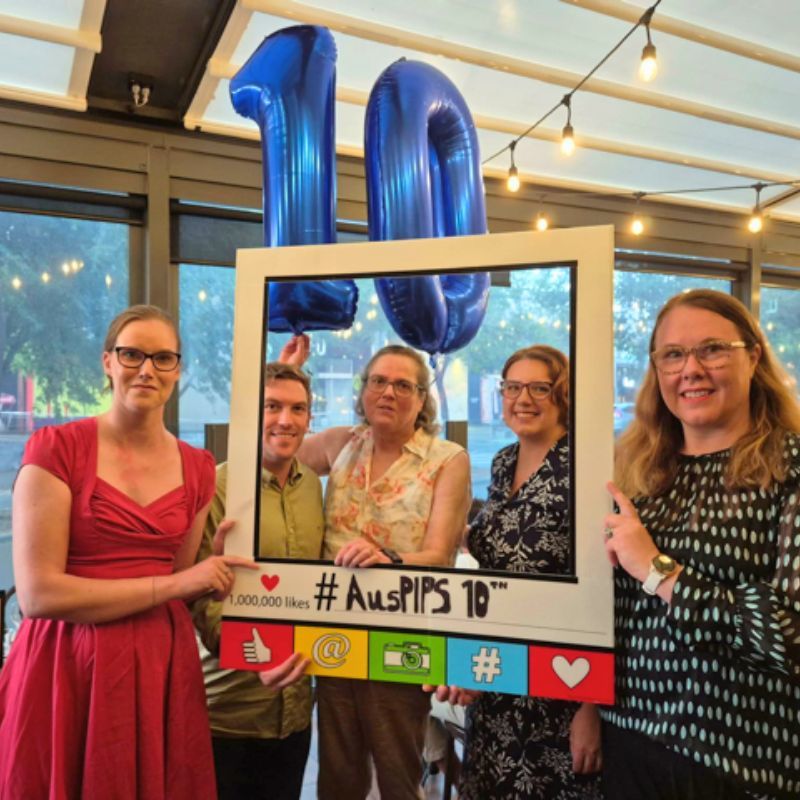
AusPIPS Inc. is overseen by a Committee of volunteers.
 |
We also have a collective of medical and allied health professionals, who contribute in an advisory capacity to its work. As Primary Immune Deficiency (PID) impacts many areas of health, our advisory panel has contributors from various medical and allied health professions. The advisory panel provides the committee with information and expertise to continue our work which includes patient advocacy and support.
Committee members
|
|

Jackie Murphy
President
Jackie Murphy is the President and co‑founder of AusPIPS, Australia’s patient‑led and patient‑focused organisation supporting people living with primary immunodeficiency and all Australians who rely on immunoglobulin therapy. Diagnosed with Common Variable Immune Deficiency (CVID) in 2006, Jackie understands first‑hand the emotional, practical, and clinical challenges of navigating a lifelong condition. Her leadership is grounded in lived experience and in the relationships she has built with patients and families across Australia.
Jackie has spent more than a decade walking alongside people who rely on immunoglobulin - listening to their stories, helping them understand their options, and advocating for fair, safe and consistent access to treatment. She has represented immunoglobulin patients on the National Immunoglobulin Governance Advisory Committee (NIGAC) and the National Blood Authority’s SCIg Implementation Working Group, bringing a calm, practical and patient‑centred voice to national policy and implementation work. In April 2026 Jackie was appointed to the Board of the National Blood Authority.
As President of AusPIPS, Jackie has led key national achievements that have directly improved the lives of immunocompromised Australians.
In 2022 she played a central role in securing nationwide access to AstraZeneca’s COVID‑19 prophylaxis Evusheld, expanding eligibility from an estimated 10,000 to more than 400,000 severely immunocompromised Australians in just five and a half weeks.
In 2024 she helped secure a nationwide funding stream for Subcutaneous Immunoglobulin (SCIg), ensuring more equitable and sustainable access to treatment across Australia.
In 2024, following joint advocacy by AusPIPS and Better Access Australia, the Minister for Health confirmed funded access to the Shingrix vaccine for immunocompromised Australians, recognising the heightened vulnerability of this cohort and addressing a long‑standing gap in vaccine access.
Jackie’s long‑standing engagement with the immunoglobulin and vaccine policy landscape has given her a deep appreciation for the complexity of the systems that support people who rely on immunoglobulin therapy. This whole‑of‑system understanding shapes her approach to advocacy: collaborative, respectful and focused on solutions that work in the real world.
Under Jackie’s leadership, AusPIPS has grown into a trusted, credible organisation that reflects the experiences and needs of the community it serves. She is known for her empathy, persistence, and ability to bring people together - patients, clinicians, researchers, and governments - to improve outcomes for those who rely on immunoglobulin therapy. Jackie’s work continues to strengthen the patient voice and build a more connected, confident, and informed community. Her work and achievements have been recognised through induction as a "Change Agent" to the Victorian Honour Roll of Women in 2026.
.
 |
Emily Edwards
Vice President
Emily is currently a Group Leader of the Primary Immunodeficiencies (PID) Group in the Department of Immunology at Monash University. Emily first started research in to PIDs in 2014 in Sydney before moving to Melbourne for a new challenge. She is researching how genetic mutations cause reduced immune function which results in increased severity and incidence of infections, as well as increased prevalence of diseases including autoimmunity and cancer. Alongside this Emily is investigating the drivers of common comorbidities of PID including autoimmunity, bronchiectasis and gastrointestinal disease in hopes of finding new biomarkers and treatment targets for these diseases. She hopes that in the future her research will contribute to better diagnostic, prognostic and therapeutic strategies for people with PID. Emily aims to deliver a patient centric research program that aligns with patient and public health priorities.
Emily is a member of the Executive of the Jeffrey Modell Diagnostic and Research Centre for Primary Immunodeficiencies in Melbourne, part a global network of Jeffrey Modell Foundation Centres. The centre is a multi-institutional network of researchers and clinicians across Melbourne (www.jmf-melbourne.org.au). In addition, Emily is also a member of the ASCIA Immunodeficiency Committee tasked with ensuring delivery of the National Immunodeficiency Strategy.
Emily joined AusPIPS as vice president in 2019. Emily is passionate about bringing positive change for people with PID including increased public awareness of PID, as well as policy change to improve treatment options for people with PID. Together, in these roles Emily wishes to contribute to improved care of patients with PID, in order to improve patient quality of life and life expectancy.
Angela Scheppokat
Secretary
Angela is Secretary of AusPIPS and an experienced leader in research governance, clinical research and healthcare compliance. She currently serves as Manager, Governance Office at the Royal Melbourne Hospital, where she leads research governance and operational initiatives that support the safe, ethical and efficient conduct of human research.
With more than 20 years' experience across healthcare, medical research organisations and the pharmaceutical industry, Angela has held senior roles in research governance, sponsor operations and clinical research, and is recognised for her collaborative and pragmatic approach to improving systems and outcomes.
Angela is passionate about consumer engagement and ensuring that patient voices are heard in healthcare and research decision-making. Through her role with AusPIPS, she is committed to supporting advocacy, awareness and improved outcomes for Australians living with Primary Immune Deficiency and associated chronic illnesses.
Tom Keys
Treasurer
Tom is a Chartered Accountant at Liston Newton Advisory in Melbourne, where he works with SME clients on tax compliance, financial reporting and CFO-style advisory work. He supports business owners with budgeting, cashflow management, restructuring matters and general commercial advice.
As the volunteer Treasurer for AusPIPS, Tom applies his accounting experience to oversee the organisation’s finances, ensure appropriate governance, and help maintain a stable financial footing so it can continue delivering for the community it supports.
Lisa Gamble
Lawyer
Lisa currently works with a corporate, commercial and construction law firm in South Australia, with her area of practice covering a broad range of commercial litigation and dispute resolution.
Lisa initially joined AusPIPS as a member of our patient advisory committee. As the parent of a child with Common Variable Immune Deficiency, she is able to provide a carer’s perspective on living with PID.
Through personal experience Lisa has become a keen advocate for improving the lives of people with PID, as well as increasing public awareness of PID and associated chronic health conditions. She has held consumer engagement roles in health research for over 8 years, including with the SA Health and Medical Research Institute and currently as Co-Chair of the Consumer Advisory Group at the National Allergy Centre of Excellence.
Lisa also has qualifications in marketing and management, is a business owner and brings a broad range of skills to the Committee.